“So what kind of things did you see?” (Bervoets).
Kayleigh is in debt, and her new job at Hexa as a content monitor for an unnamed social media platform has a nice paycheque that just might get her out of it. All she has to do is stare at a screen and remove offensive videos and pictures and rants all day, unless it meets the community guidelines. It’s difficult, but Kayleigh has a good group of colleagues and her new girlfriend Sigrid who she works with to help. But Sigrid is starting to act strange, and her colleagues are starting to believe the conspiracy theories they’re supposed to be critical of. Maybe this job is too much for some people, but Kayleigh can handle it. Right?
I need to learn to stop trusting BookTok for Horror recommendations. I feel guilty, honestly. I requested my library get a copy of this book before reading it based on the hype alone and now I’m just disappointed. Sorry library and library users!
We Had To Remove This Post has an interesting premise that is both topical and relevant to our world today: how social media can desensitize and brainwash individuals with constant use. Just look at the rise of conspirituality during the pandemic, as well as how many people started believing conspiracy theories during a time they had to isolate and be around screens for too long? The book also attempts to offer a look into the job of content monitoring (which I’m interested in looking into more from the sources Bervoets includes at the end of her book) and the trauma associated with it. Some of the content monitoring that happens in the book, for example, is that posts about Holocaust conspiracies would be flagged in countries where denying the Holocaust is illegal, but okay to post in a country that doesn’t have those laws. This topic of content monitoring and the trauma and desensitization associated with it would work perfectly in a horror setting, but sadly Bervoets fails to make it terrifying or interesting.
The book is incredibly short at 144 pages and even then, it was a chore to get through. It’s also written like a letter from Kayleigh to a lawyer who is defending other workers at Hexa for what they experienced on the job. Kayliegh isn’t interested in suing, but she’s willing to tell the lawyer her story which was also a weird way of formatting the story which just didn’t work for me. Spoiler, but we don’t get to see what Kayleigh sees, which is Bervoets’ point, I guess. I’m not upset about that, I don’t go looking for books that have gruesome things spelled out for me on the page, but when one is touted on TikTok with “Trigger Warnings for everything” and getting a surface level at best scare is disappointing. If anything, I think not including what Kayleigh sees on a daily basis a strong storytelling technique, but that means the horror has to come from somewhere. Maybe if this were a longer novel it could have slowly shown Kayleigh’s desensitization. We get hints that all isn’t well with her and her colleagues with a lot of mention of drinking and drug use, but aside from substance abuse there’s few other examples until the very end about how desensitized Kayleigh has become or how deeply ingrained some of her colleagues have gotten into conspiracy theories. I know Kayleigh is desensitized, but I needed more of a gradual reveal then the bomb that was given at the end.
We Had To Remove This Post offers an interesting premise that doesn’t deliver, and isn’t all the scary. It has brief, skimming moments but overall is a disappointment. Don’t trust every book you see on TikTok!
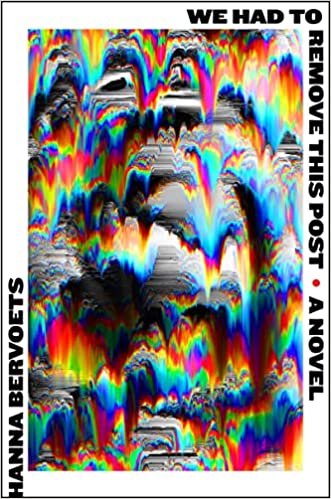 Publication: July 18 2023
Publisher: Sandycove
Pages: 144 pages (Digital)
Source: Libby
Genre: Fiction, Contemporary, Horror, Queer, Novella
My Rating: ⛤⛤
Summary:
Kayleigh needs money. That’s why she takes a job as a content moderator for a social media platform whose name she isn’t allowed to mention. Her job: reviewing offensive videos and pictures, rants and conspiracy theories, and deciding which need to be removed. It’s grueling work. Kayleigh and her colleagues spend all day watching horrors and hate on their screens, evaluating them with the platform’s ever-changing terms of service while a supervisor sits behind them, timing and scoring their assessments. Yet Kayleigh finds a group of friends, even a new love—and, somehow, the job starts to feel okay.
But when her colleagues begin to break down; when Sigrid, her new girlfriend, grows increasingly distant and fragile; when her friends start espousing the very conspiracy theories they’re meant to be evaluating; Kayleigh begins to wonder if the job may be too much for them. She’s still totally fine, though—or is she?
 Sarah O'Connor