“Hill House neither sleeps nor dreams. Shrouded within its overgrown lawns and sprawling woodlands, the long shadows of mountains and ancient oaks, Hill House watches. Hill House waits,” (Hand 3).
Struggling playwright Holly Sherwin has just received a grant to develop her play, an adaption of The Witch of Edmonton, that may just bring her the success she was promised in her youth. When she finds the isolated and remote Hill House, Holly knows she’s found the perfect place to rehearse and develop her play. Inviting her actors, the infamous Amanda Greer, her best friend Stevie, and her girlfriend Nisa, Holly is sure that once they settle in to Hill House everything will become clear. And Hill House, not sane, is ready to welcome it’s guests.
I need to learn to leave things that are related to The Haunting of Hill House alone. Was the Mike Flanagan series good? Yes, but a poor adaption (though I guess there’s some discussion to be had about what makes a “good” adaption). Similarly, was A Haunting on the Hill authorized by Shirley Jackson’s family as a sequel to The Haunting of Hill House? Yes. Does that mean it’s good?
Meh.
I love Shirley Jackson, I love The Haunting of Hill House, and I knew before I even started reading this that I would be unfairly judging the book by each word Elizabeth Hand used, each character choice and punctuation mark again Jackson’s own. It isn’t fair, but when an authorized sequel to arguably one of the best haunted house novels is published, some criticism is arguably allowed. My main issue with the novel of course being that it doesn’t feel related to The Haunting of Hill House, aside from some character names and a weird moment in the last half (you’ll know when you read it) and sharing the name Hill House (it seems Flanagan and Hand have this in common) there is nothing that actually makes it feel like these two books exist in the same universe.
I’m a big fan of witch novels, but witches never existed in Hill House so why bring them in now? I understand it’s to bring some connection to Holly’s play, but even then it doesn’t fit. There’s also many hares which made the book feel more connected to T. Kingfisher’s What Moves The Dead than Jackson’s famous novel. The book also doesn’t focus enough on any of the characters. Holly is arguably the most developed, but with the switch from her first-person point-of-view to Nisa, Stevie’s, and Amanda’s respective third-person point-of-views the latter three just didn’t get the fleshing out that they deserved.
That’s not to say Hand’s novel is bad, as it’s own separate entity not connected to The Haunting of Hill House it’s not a bad horror novel. Weirdly enough I was looking for a book about actors being haunted (a niche genre, but if you have recommendations let me know!) and this one checked most of the boxes I was looking for. There were some creepy bits, nothing as scary as Hill House but not bad. The writing is good, and the characters are interesting enough though the point of view shifts come pretty out of nowhere.
By itself A Haunting on the Hill isn’t a bad novel. It’s creepy enough, and I loved how Hand looked at superstition and actors (again, more actors being haunted book recommendations please!) but as a sequel it falls flat. There is only one Hill House, and Hill House stands alone.
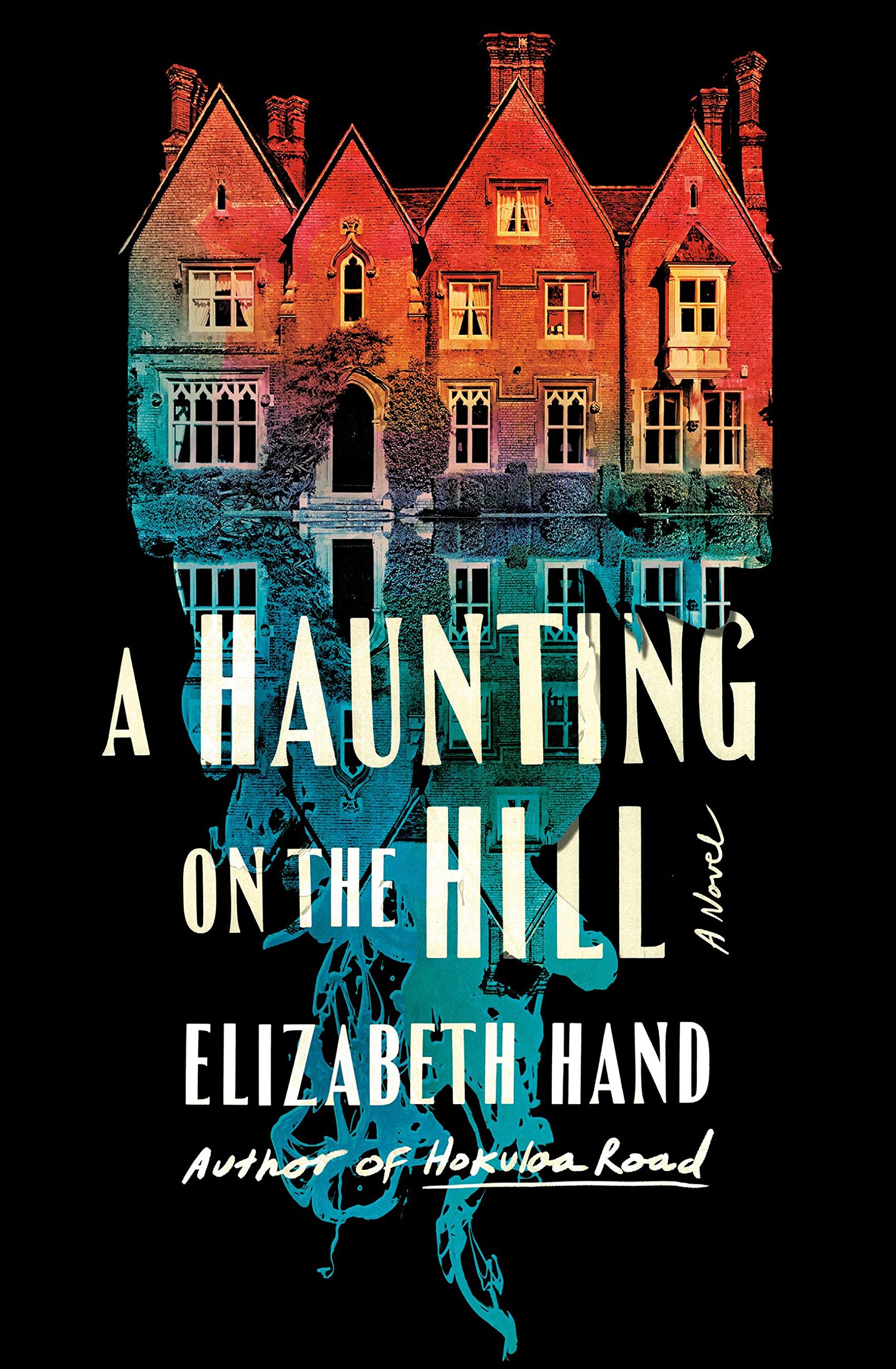 Publication: October 3 2023
Publisher: Mulholland Books
Pages: 326 pages (Hardcover)
Source: Library
Genre: Fiction, Horror, Gothic, Queer
My Rating: ⛤⛤⛤.5
Summary:
Holly Sherwin has been a struggling playwright for years, but now, after receiving a grant to develop her play, The Witch of Edmonton, she may finally be close to her big break. All she needs is time and space to bring her vision to life. When she stumbles across Hill House on a weekend getaway upstate, she is immediately taken in by the ornate, if crumbling, gothic mansion, nearly hidden outside a remote village. It’s enormous, old, and ever-so eerie—the perfect place to develop and rehearse her play.
Despite her own hesitations, Holly’s girlfriend, Nisa, agrees to join Holly in renting the house out for a month, and soon a troupe of actors, each with ghosts of their own, arrive. Yet as they settle in, the house’s peculiarities are made known: strange creatures stalk the grounds, disturbing sounds echo throughout the halls, and time itself seems to shift. All too soon, Holly and her friends find themselves at odds not just with one another, but with the house itself. It seems something has been waiting in Hill House all these years, and it no longer intends to walk alone . . .
 Sarah O'Connor