“Reconciliation is a process, and that process must begin with an honest assessment of our history,” (Sniderman and Sanderson, xiii).
The small town of Rossburn and Waywayseecappo reserve have neighboured one another for nearly as long as Canada has been a country. The two communities are divided by a beautiful valley and years of racism. In Rossburn a town of Ukrainian immigrants where more than a third of adults graduate university while less than a third of adults have graduated high school in the Waywayseecappo reserve. Sniderman and Sanderson follow two families, one white and one Indigenous over multiple generations to show the story of Canada, and the ways that prejudice and inequality builds in communities.
I was drawn to Valley of the Birdtail because I attended the Stratford Festival’s Reader’s and Writers week where both Andrew Stobo Sniderman and Douglas Sanderson were giving a talk about their book. I’m happy that I read the book before hearing them speak, though I’m confident that after hearing them speak I would have been drawn to the book regardless. It was just nice to have the knowledge of the book and to hear them expand on the subject matter in person.
One of the biggest strengths of the book is the writing. During the talk Sniderman and Sanderson explained that they went into the book wanting to educate but not shame readers (particularly Canadians) who may not know about residential schools or the details of Canada’s history. In a technological age where many of us can search something at our fingertips, there tends to be a lot of shame around not knowing more than they should. There’s many reasons for this, notably Canada’s inability to acknowledge and teach Indigenous history, but Sanderson and Sniderman go into their book knowing that reader’s might not know Canada’s honest history and explains it in a simple way without the jargon that sometimes crowds history books.
Another strength is how lucky the authors were in getting the consent of Maureen Twovoice and Troy Luhowy, from Waywayseecappo and Rossburn respectively, to have their stories, experiences, and family histories be told. It gave Valley of the Birdtail a more literary and personal feel to the book.
I think the authors do an excellent job drawing parallels between the Ukrainian and Indigenous communities in Canada and the areas of strife they both experienced (I didn’t know that Ukrainian Canadians were put in internment camps in Canada during WWI) as well as the differences between them. While Indigenous peoples were forced onto reserves, forced to give up their children and put through tremendous abuse in residential schools and striped of their cultures, the Canadian government sought out Ukrainian immigrants to live and farm land in Manitoba and were encouraged to celebrate their cultures. It was interesting to see how these two communities so close to one another could live and grow in such different ways and I enjoyed the updates that the authors gave at the talk for the relationship between the communities now.
Valley of the Birdtail is such a strong book that wonderfully parallels the Ukrainian and Indigenous communities focused on in the book while also offering plans and ideas for how to help Indigenous communities struggle in Canada. I hope that this book ends up being taught and studied in the Canadian curriculum, and I hope the Canadian government actually considers and puts into action the solutions that Sniderman and Sanderson provide in this book to bring about true reconciliation.
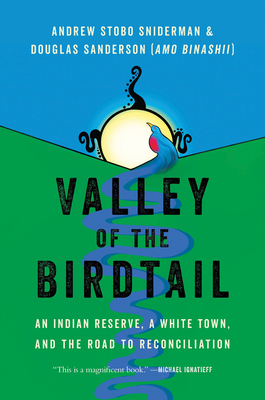 Publication: August 30 2022
Publisher: HarperCollins
Pages: 384 pages (Hardcover)
Source: Library
Genre: Non-Fiction, Indigenous, Canadian, History
My Rating: ⛤⛤⛤⛤⛤
Summary:
Divided by a beautiful valley and 150 years of racism, the town of Rossburn and the Waywayseecappo Indian reserve have been neighbours nearly as long as Canada has been a country. Their story reflects much of what has gone wrong in relations between Indigenous Peoples and non-Indigenous Canadians. It also offers, in the end, an uncommon measure of hope.
Valley of the Birdtail is about how two communities became separate and unequal–and what it means for the rest of us. In Rossburn, once settled by Ukrainian immigrants who fled poverty and persecution, family income is near the national average and more than a third of adults have graduated from university. In Waywayseecappo, the average family lives below the national poverty line and less than a third of adults have graduated from high school, with many haunted by their time in residential schools.
This book follows multiple generations of two families, one white and one Indigenous, and weaves their lives into the larger story of Canada. It is a story of villains and heroes, irony and idealism, racism and reconciliation. Valley of the Birdtail has the ambition to change the way we think about our past and show a path to a better future.
 Sarah O'Connor